November 24, 2026
Running a convenience store is a balancing act. Fuel prices fluctuate, operating costs continue to rise, customers have more choices, and keeping store teams focused on sales and service is an ongoing challenge.
But what if some of the biggest opportunities to improve profitability are already within your existing operations?
During the BandyWorks and Edge Petrol webinar, How to Make $10,000 Extra Per Store, industry leaders Slaton Whatley of Whatley Oil and Jonathan Tang of Tang Mart shared practical ways they are approaching this challenge. The discussion focused on two important areas of convenience store profitability: fuel margins and inside sales.
Their experiences offer a useful reminder: meaningful improvements don’t always require major changes. Sometimes, a few cents in fuel margins, better upselling habits, stronger customer loyalty, and closer attention to everyday costs can make a real difference.
Here are five opportunities worth a closer look.
1. Look Beyond Regular Fuel Pricing
Fuel pricing is one of the most visible parts of running a convenience store, but regular gasoline isn’t the only place where operators can find margin opportunities.
Slaton Whatley, Director of Sales at Whatley Oil, shared how his team started looking more closely at the spread between regular, mid-grade, and premium gasoline.
His observation was interesting: mid-grade and premium account for a smaller share of total gallons sold, but customers purchasing these grades may be less sensitive to price differences. Unlike regular gasoline, these prices aren’t always displayed on the main roadside sign.
Using an example of a store selling approximately one million gallons annually, Slaton demonstrated how an additional 3.5 cents per gallon across mid-grade and premium could generate approximately $5,000 in additional annual gross profit.
The bigger takeaway wasn’t simply about raising prices. It was about understanding the local market, knowing what competitors charge across all grades, and recognizing where existing pricing strategies might be leaving money on the table.
2. Turn Everyday Transactions into Sales Opportunities
Many convenience store transactions are straightforward. Customers walk in, pick up what they need, pay, and leave.
But there’s often an opportunity to make those transactions more valuable.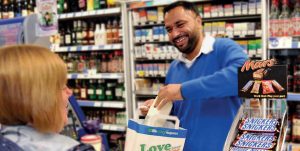
Jonathan Tang, President of Tang Mart, shared an interesting experiment his team conducted with Reese’s candy bars.
The store had been selling the product below its cost as part of an introductory promotion. Rather than looking at it simply as a pricing exercise, Jonathan used it to encourage employees to become more comfortable with upselling.
The team started offering customers a Reese’s bar for 99 cents at checkout.
The result? Sales increased from just 95 units to more than 2,500 units during the experiment.
While the introductory pricing played a role, the bigger win was getting employees involved and showing them that a simple customer interaction could contribute to store sales.
It was also a reminder that promotions only work when the people serving customers know about them and feel comfortable communicating their value.
3. Make Customer Loyalty Part of Your Growth Strategy
Competing with larger retailers can be difficult, particularly for independent operators and smaller convenience store chains.
They may not have the same purchasing power or ability to compete on price. But that doesn’t mean they cannot build a loyal customer base.
Jonathan shared how Tang Mart introduced its own loyalty program to strengthen customer relationships and compete more effectively in its local market.
What started as an effort to introduce tobacco loyalty grew into a broader program that rewarded customers and supported promotional activity.
The rollout also included a customer appreciation day, giving the team an opportunity to introduce the program and connect with customers.
One of the most valuable parts of this experience was how the team contributed to the initiative. Employees brought forward ideas, participated in the rollout, and helped make it successful.
For smaller operators, loyalty doesn’t necessarily have to involve a complicated program. The real opportunity is understanding what customers value and giving them a reason to keep coming back.
4. Pay Attention to the Costs Hiding in Daily Operations
Increasing sales is important, but protecting the profit already being generated is equally valuable.
During the discussion, Jonathan shared how reviewing store performance more closely helped uncover issues that weren’t immediately obvious.
Some examples included:
- Food products being marked down unnecessarily.
- Items being given away without proper oversight.
- Waste in food service and fountain categories.
- Supplier credits and product guarantees that weren’t being fully accounted for.
Having better visibility into store activity and identifying potential sources of shrink can help managers address losses earlier.
One particularly interesting example involved a 79-cent fountain drink that was the store’s best-selling item in its category. Looking beyond the overall category numbers helped the team identify opportunities they hadn’t previously recognized.
The lesson is that strong sales figures don’t always tell the complete story. Understanding what’s happening at the individual product and category level can reveal where margins are being lost.
5. Match Labor and Store Operations to Actual Business Needs
Labor is one of the significant operating expenses for convenience stores, and scheduling can have a direct impact on profitability.
Jonathan discussed how his team began looking more closely at staffing levels and whether employee hours were aligned with actual store traffic.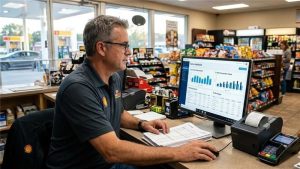
The conversation wasn’t simply about reducing hours. It was about understanding when the store needed additional coverage and when staffing could be better distributed throughout the day.
For example, a store may have multiple employees scheduled during slower periods while experiencing heavier traffic at other times.
The key consideration: Are staffing levels aligned with when the store actually needs them?
Looking at sales patterns, busy periods, and staffing requirements together can help operators make more informed scheduling decisions.
The same principle applies across store operations: better visibility into what’s happening makes it easier to identify where adjustments may be needed.
Understanding labor hours, sales, and staffing requirements gives managers a clearer picture of where adjustments may be needed.
The Common Thread: Better Decisions Start with Better Visibility
Although Slaton and Jonathan approached profitability from different sides of the business, their discussions had something important in common.
Both emphasized the value of understanding the numbers, setting realistic goals, monitoring results, and giving changes enough time to work.
Slaton spoke about treating fuel pricing changes as experiments rather than making decisions based on a single day’s results. Jonathan highlighted how team engagement, accountability, and better visibility into store performance helped turn ideas into action.
For convenience store operators, the opportunity isn’t necessarily found in one major change. It can come from several smaller improvements across fuel, inside sales, loyalty, labor, and everyday operations.
An additional $10,000 in annual profit per store is an ambitious target, but the discussion showed why it is worth examining the opportunities that may already exist within your business.
Want to hear the full discussion?
Watch the BandyWorks and Edge Petrol webinar, How to Make $10,000 Extra Per Store, featuring Slaton Whatley of Whatley Oil and Jonathan Tang of Tang Mart, with Joe Coulburn and Tom Bandy facilitating the conversations.