November 3, 2026
Running a truck stop takes more than keeping fuel pumps running and shelves stocked. It means looking after employees, understanding customers, adapting to changing expectations and making decisions that will affect the business for years to come.
For Raina, a fourth-generation truck stop operator in Nebraska, there’s something more behind those responsibilities: carrying forward a family business while finding ways to keep it growing.
Raina and her brother run two truck stop locations, with their dad still involved. Their larger location, which she calls their flagship, includes a full convenience store, restaurant, service center, ten showers and approximately 150 parking spaces.
It’s a busy operation, but when Raina talks about what makes the business work, she doesn’t start with the facilities or the numbers.
She starts with her people.
Building a Truck Stop With Its Own Character
The family’s flagship location was built in 2008, when the economy was going through a difficult period. Money was tight, but Raina’s dad had a clear vision for what he wanted the location to become.
The family managed to get the project completed in about six months. During construction, they continued operating from a small temporary location nearby. Employees helped clean up the construction site at the end of the day, and some even took turns staying in a camper overnight to keep an eye on the property.
It was important to the family to keep people employed during that period. Many of those employees are still with the business today.
One of the most recognizable features of the flagship location is a large mural covering the convenience store. It depicts Highway 6, one of the early coast-to-coast highways in the United States. Artists projected the design onto the wall and worked on it section by section.
There are even a few surprises hidden in the artwork, including a Kool-Aid Man and a flying saucer over Nevada.
The location is also a certified museum, something Raina jokingly says she should include on her résumé as a museum curator.
The mural gives customers something to stop and look at, but it also says something about the family behind the business. They wanted to build a place with its own character, not just another stop along the highway.
A Business Built Around Its People
For Raina, one of the biggest responsibilities of running a family business is understanding how many people depend on it.
Around 80 people rely on the business for their livelihoods. Some have been part of the team for decades.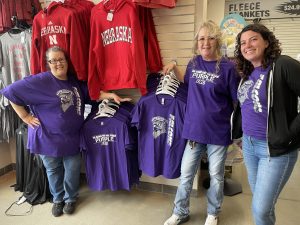
Her shop manager has been with the company for approximately 47 years. Other employees have worked there for more than 30 or 40 years. Some employees’ children and grandchildren have also joined the business.
Raina takes pride in seeing those relationships continue across generations.
She remembers how important it was to her dad to keep employees working when the flagship location was being built during a difficult economic period. That same responsibility stays with her today.
When she thinks about what it means to run the business, she knows there are families depending on it.
She also wants the workplace to be somewhere people enjoy coming to.
Raina says she can often hear employees laughing from her office, even though it’s not close to the fuel desk. For her, that is part of the culture she wants to maintain.
The same thinking extends to customers. Professional drivers spend so much time on the road that a truck stop should feel like a home away from home. A friendly conversation, a little humor and people who remember them can make a difference.
Many of their customers have been visiting for years. They know the employees, and they notice when something feels different. They might even let Raina know if a cashier isn’t treating customers as kindly as they used to.
That’s why she puts so much importance on hiring people who genuinely care about others.
As she explains, you can teach someone how to use a point-of-sale system or handle the practical parts of a job. Compassion is much harder to teach.
For Raina, good customer service starts with having people who enjoy looking after other people.
Giving Customers More Reasons to Come Back
With so many truck stops and fuel options along the road, Raina understands that customers have plenty of choices.
She wants her locations to be places people choose to visit, not simply somewhere they happen to stop.
That’s one of the reasons she has invested time in making loyalty benefits more accessible to different types of customers.
The business has seen success with its AMBUCK$ program, but Raina wanted to explore how those benefits could reach more people, including local customers who may not travel between multiple AMBUCK$ locations.
She also wanted to connect the two locations and make the experience more consistent for customers.
For Raina, the value of a loyalty program isn’t limited to the initial purchase. A customer might stop for a sandwich deal and end up buying a few other things while they’re there. More importantly, they might have a reason to return.
She sees the return customer as an important part of the investment.
The goal is simple: offer customers something worthwhile, give them a reason to choose the business and find ways to make that experience better.
Understanding What Customers Actually Want to Eat
Food is another area where Raina believes operators need to pay attention to what customers want rather than simply assume they know.
When she started looking more closely at the hot food offering, she actually ate from the hot food case every day for about two weeks. She wanted to experience the products herself and understand whether they were good enough.
That hands-on approach even led to a small menu change.
One of the restaurant’s popular items was its thick-cut, sugar-cured bacon. While eating one of the sandwiches, Raina wondered why they weren’t using the same bacon that customers already loved from the restaurant.
It was a simple observation, but it led to a change in what they offered.
She also understands that drivers don’t always want the same packaged food every day. They want variety and something fresh when they have time to stop.
Customer habits have changed over the years, too. With drivers working around tighter schedules and electronic logging requirements, they don’t always have the time to sit down for a full meal like they might have in the past.
The family’s restaurant, which was once one of the strongest parts of the truck stop, has adapted to those changes.
It has become more of a gathering place for local customers and the surrounding community. The team has even organized movie nights, giving drivers a chance to spend time inside instead of staying in their trucks.
On Fridays, people from a nearby dance hall also come in.
Rather than trying to make the restaurant operate exactly as it did years ago, Raina has looked at who her customers are today and how the business can continue serving them.
Learning From Other Operators and Knowing When to Adjust
Running a truck stop means constantly thinking about what’s next.
From EV charging and digital price tags to food service and changing customer expectations, there are plenty of decisions to consider.
Raina doesn’t pretend that every decision has an obvious answer. She belongs to industry groups such as AMBEST, where she can connect with other operators and learn from their experiences.
Sometimes the best way to approach a new idea is to find out what another operator has already tried.
Did it work? What would they do differently? Were there challenges they hadn’t expected?
Those conversations help Raina think through decisions before moving forward.
She also enjoys taking road trips and visiting other stores. Seeing how customers move through a location, what they notice and how other operators run their businesses gives her a different perspective.
But not every project works out as planned.
Raina remembers hearing a speaker say:
“You have to fail fast.”
She took that advice to heart. If a project keeps running into roadblocks or takes more time than it should, sometimes it’s better to step back and reconsider.
That doesn’t mean the idea can never happen. It means knowing when to pause, where to spend your time and when to move on to something else.
Her approach is to keep learning, try things that make sense and be ready to adjust along the way.
Good Leadership Starts With Understanding People
One of the most meaningful parts of Raina’s conversation was something her dad used to ask whenever an employee was having a difficult time:
“What do you think’s going on with them?”
It’s a simple question, but it changes how a manager approaches a problem.
An employee who has performed well for years might suddenly start struggling. Before assuming they’ve stopped caring about their work, it’s worth finding out what’s happening.
People have lives outside the store. Sometimes personal situations affect how they show up during a shift.
Raina believes managers need to take the time to understand that.
It doesn’t mean avoiding accountability or ignoring problems. It means knowing the difference between an employee who needs help and someone who isn’t meeting expectations.
That understanding helps build trust. It also makes it easier for employees to come forward when they need support.
It’s a lesson that connects directly to her approach to running the business: take care of the people around you, and they will take care of the business too.
Keeping the Family Business Moving Forward
Running a fourth-generation family business means respecting what previous generations have built while recognizing that the industry won’t stand still.
Raina’s grandfather believed that a business that stays stagnant will eventually start to fall behind. That idea still influences how she looks at the future.
There will always be something new to consider, whether it’s a change in customer habits, a new technology or a different way to run part of the operation.
But Raina also knows that growth doesn’t come from one person making every decision.
When asked what she would want the fifth or sixth generation to remember, she returned to the same message:
“Invest in your people. Good people are the ones that take care of you back.”
She gives much of the credit to the people who help run the business every day. They’re the ones who keep things moving, look after customers and take responsibility for their work.
As Raina puts it, she doesn’t do what she does every day alone.
That’s what makes this family business more than just a collection of locations. It’s a business built over generations, supported by employees who have become part of its story, and willing to adapt as the industry changes.
Watch Raina’s Full Conversation
There’s much more to Raina’s story, from building the flagship location and keeping employees through difficult times to adapting the restaurant and planning for the next generation.
Watch the full conversation to hear Raina share her experiences in her own words.
For another perspective on managing and developing a convenience store team, read Amy’s approach to knowing your team.