September 1, 2026
Keeping a convenience store team motivated is not always about hitting a number or handing out rewards. For Beth Howard, store manager at Grub Mart in Auburn, Alabama, convenience store team motivation starts with something much more personal: knowing your people, setting clear expectations, recognizing good work, and creating a place where employees actually enjoy coming to work. In a conversation with Mason, Beth shared how she has built a low-turnover team by balancing accountability with compassion, keeping things fun, and making sure her employees know she believes in them.
Beth has spent about 20 years working in fast-paced retail. She started as a cashier and worked her way through different roles and companies before becoming a store manager.
She says she has never really looked at the work as just a job.
“I have a passion, so I don’t really look at it as a job.”
That attitude comes through in the way she talks about her team. For Beth, running a successful store isn’t only about the numbers. It is about the people behind those numbers.
Make Work a Place People Want to Be
Beth believes a team can be productive without making every day feel serious.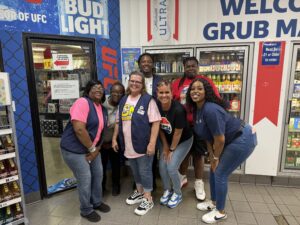
Her approach is simple: have fun, build relationships, and still expect people to do their jobs well.
She says some employees come into the store thinking they are simply there for a paycheck. But once they experience the culture she has created, that can change.
“When they realize that the leadership of that job, that they thought was just going to be a paycheck, was, oh, we can have fun.”
That does not mean Beth lets standards slide. In fact, accountability is one of the foundations she talks about most.
She expects her team to show up, perform, treat customers well, and take responsibility for their work. But when someone falls short, she does not immediately assume they are a bad employee. She talks to them.
“I’ve noticed that you’ve been lacking in these areas. Is there something that I need to know?” is the kind of conversation she tries to have before jumping straight to consequences.
That combination of clear expectations and personal conversations is a big part of how Beth approaches convenience store team motivation.
Accountability Doesn’t Have to Mean Pushing People Away
One of Beth’s examples involved an employee who was suspended after repeated issues. The consequence was serious, but Beth did not treat it as the end of the relationship.
She explained what had happened, what needed to change, and what the employee could work on when they returned. When the employee came back, Beth says she had a great attitude and performed much better.
For Beth, accountability works best when employees understand what is expected of them and why the consequence happened.
“I’m very clear with my communication with my employees, and I think they appreciate that more than anything.”
She also says she does not suspend someone the first time she has an issue with them. She wants to have conversations, give warnings, and understand what might be happening first.
That patience gives employees an opportunity to correct the problem before it becomes something bigger. It also makes the occasional consequence easier to accept because it does not feel like it came out of nowhere.
Recognition Can Be Simple
Beth doesn’t rely on complicated programs to keep her team motivated.
Sometimes, it is a gift card for the top-selling cashier. Sometimes, it is recognizing employees who consistently show up on time and do not call out. She also pays attention to the small wins.
If the store sells 500 cocktails to go, she might ask the team, “Can we do 700 this month?”
The point is not just to give employees another target. Beth gets them involved in figuring out how to reach it.
What can they do differently? Which employees are strongest at selling during the day? Who connects particularly well with the nighttime customers?
After working with her team for a while, Beth has learned those differences.
“I know my cashiers that have their strengths on day shift, and I know the ones that I have on night shift.”
That knowledge allows her to put people in situations where their strengths can actually help the store. For Beth, convenience store team motivation is not one-size-fits-all.
Know Your People Beyond Their Job Title
One of the strongest themes in Beth’s approach is getting to know employees as individuals.
She pays attention to their personalities, strengths, goals, and areas where they need development. She also recognizes that employees may have things happening outside of work that affect how they show up during a shift.
But she is careful about boundaries. Beth does not connect with employees on her personal social media, and she does not believe managers need to become their employees’ friends outside of work.
Instead, she creates a safe space inside the store. If someone needs to talk, she gives them an opportunity to do that in her office.
Sometimes, she says, people simply need somebody to listen.
“When they leave your office, they feel 10 times better than what they did when they came back in.”
That does not mean solving every personal problem for an employee. It means recognizing that people bring their whole lives with them when they walk through the door.
A good manager can acknowledge that without losing sight of the job.
Look for Leaders Who Can Handle the Pressure
Beth has also trained several assistant managers, and she has learned that not everyone who looks good on paper is ready to lead a team.
One of the things she watches closely is how someone responds when things do not go according to plan.
- Can they stay focused?
- Can they handle a difficult customer?
- Can they work with different personalities?
- Can they keep their attitude under control when someone else is having a bad day?
For Beth, those qualities matter because convenience retail can get stressful quickly.
“If you fold under pressure, then you’re not going to be a good leader.”
She also looks for people who can get along with the entire crew. Being good at the operational side of the job is not enough if an assistant manager cannot build relationships with the people they are supposed to lead.
That is especially important in a customer-facing environment, where employees may deal with difficult situations throughout the day.
Beth puts it bluntly:
“You cannot criticize customer service until you worked in it.”
Her experience has taught her that leaders need to understand the pressure their employees are under before they can effectively coach them through it.
Believe in People Before They Believe in Themselves
Beth recently trained her third assistant manager, and she described one thing that stood out about him: he had a winning attitude.
Once he joined her store, he started to see something different in the way she worked with the team. He told her that he had never had someone push him or believe in him the way she did.
That is the kind of moment Beth seems to value most.
She believes small affirmations matter. Telling an employee they are doing a good job, pointing out an improvement, or letting someone know you believe they can handle more responsibility can have an impact. It can also change how an employee sees their own potential.
That is one reason Beth has ended up training people who were originally expected to work at other stores. Once they experienced her team environment, they did not always want to leave.
Communicate Early. Communicate Often. Stay Consistent.
When asked about the changes happening in convenience retail, Beth did not focus on one particular technology or program.
Instead, she went back to something she has relied on throughout her career: communication.
Her philosophy is straightforward:
“Always communicate early, communicate often, and always remain consistent.”
That becomes especially important when employees are being asked to change the way they work. Beth believes people are more likely to accept change when they understand why it is happening.
Her store has gone through changes involving scorecards, rewards, and other company initiatives. Rather than presenting those changes as something being forced onto the team, she tries to explain the reason behind them.
The result, she says, has been a team that stays competitive and engaged even when things change. That approach lines up with broader industry research showing that employee engagement, training, recognition, and communication all play an important role in the frontline employee experience.
A Team That Wants to Win Together
Beth’s store recently placed No. 10 in its district through Marathon, something she is clearly proud of.
But the number is not really the story.
What stands out is how she got there.
She knows which employees thrive on certain shifts. She recognizes good performance. She gives people another chance when they make mistakes. She has difficult conversations instead of avoiding them. She celebrates wins. She trains people for the next role, and she tries to make sure employees know that she sees them as people, not just as names on a schedule.
There is no complicated formula behind her approach. It is a lot of communication, consistency, recognition, accountability and, as Beth would probably tell you, a little bit of fun.
That may be the biggest lesson from her experience: convenience store team motivation does not always require something big. Sometimes it starts with a manager who pays attention, believes in their people, and makes the effort to bring the team along with them.
Watch Beth’s Full Conversation
Watch Beth Howard talk about building her team, developing future leaders, handling accountability, and keeping her store motivated.
Looking for more team-building ideas? Read – Convenience Store Team Communication: Lessons from Laura Law to hear how another convenience retail leader uses communication, confidence, and manager buy-in to strengthen her stores.
Convenience Store Team Communication: Lessons from Laura Law