September 21, 2026
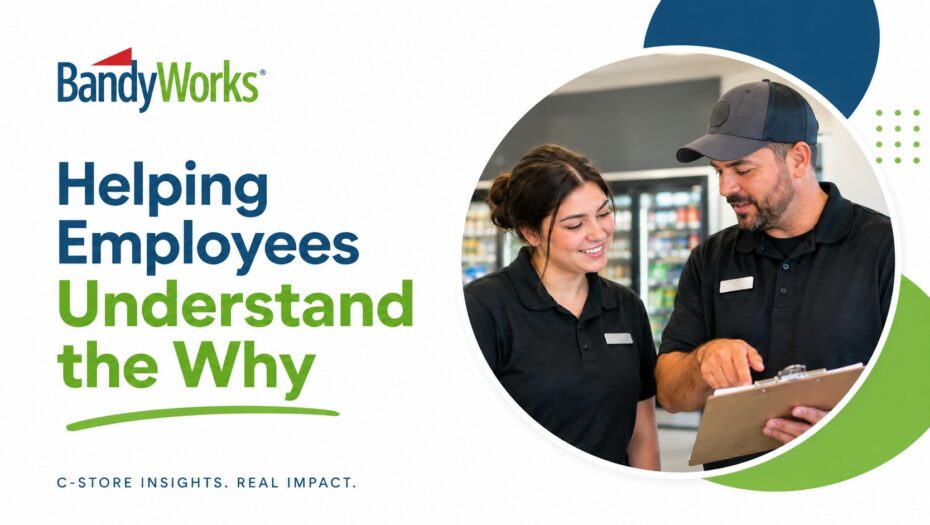
Helping Employees Understand the Why
In a convenience store, managers give directions throughout the day. Clean this area. Stock this shelf. Check the cooler. Take care of an order. But knowing what needs to be done is only part of the picture. Employee coaching in convenience stores can also mean helping employees understand why a task matters in the first place.
That small piece of context can change how an employee sees the work – from something that simply needs to get done to something that has a purpose behind it.
Employee Coaching in Convenience Stores Starts With Context
A simple task can have a bigger purpose behind it.
Take cleaning the store. An employee may see taking out the trash or cleaning an area as another task on the list. A manager may see it differently — as part of keeping the store welcoming and making sure customers have a good experience.
That difference in perspective is where a simple explanation can help. Instead of only giving an employee a task and a time to complete it, explaining why it matters gives them some context around the work.
The same idea can apply to stocking, ordering, customer service, or other daily responsibilities.
When employees understand how their work connects to the store, the task can start to mean something more than simply checking something off a list.
A Quick Check Can Prevent Confusion
Of course, explaining something doesn’t always mean it was understood.
An instruction can seem perfectly clear to the person giving it but leave questions for the person receiving it. A simple “Does that make sense?” can give employees an opportunity to speak up before a misunderstanding turns into a mistake.
In some situations, asking an employee to explain back what they understood can help too, especially when introducing a new process or explaining that something needs to be handled differently.
It doesn’t have to become a formal training exercise. Sometimes, it’s just a quick check during a normal conversation.
That quick check can also tell a manager something important: whether the employee needs more explanation, more practice, or simply a little clarification.
Keep the Conversation About the Work
It can be easy for feedback to become focused on the employee rather than the situation. Keeping the conversation around what happened, what the expected process was, and what could be different next time keeps the focus on the work.
Being firm doesn’t necessarily mean making the conversation personal. The expectation can still be clear without turning the conversation into something bigger than the issue itself.
And once the expectation is clear, the next step is understanding how that particular employee responds to feedback.
Employee Coaching in Convenience Stores Isn’t One-Size-Fits-All
Every employee brings a different personality and different strengths to the store.
Some people may respond well to direct feedback. Others may need more time, a different explanation, or a one-on-one conversation. For some employees, a little humor or a different approach can make the conversation easier.
Getting to know employees helps managers recognize those differences.
It also gives them a better sense of when someone needs more coaching, when they simply need clarification, and when they’re ready for more responsibility.
That becomes especially important as employees take on more ownership.
Give People Room to Grow
Coaching doesn’t always mean stepping in and taking over when something isn’t going well.
If an employee is given responsibility for an area and starts to slip, regular check-ins can help a manager understand what’s happening before taking that responsibility away.
Maybe the employee needs more direction. Maybe they are struggling with part of the process. Or maybe they simply need to be reminded of the expectation.
Keeping the responsibility with the employee, while staying involved, gives them a chance to improve.
The same idea applies when responsibilities are delegated. Employees can take on different areas based on their strengths, interests, and areas where they have room to grow.
Small Conversations Add Up
None of this has to happen in a formal meeting. These conversations can happen while walking the store, working alongside someone, checking an area, or talking through a task during a shift.
A manager explains why something matters. An employee asks a question. A quick conversation clears up something that could otherwise become a repeated mistake.
Over time, those small moments become part of how a team learns.
That’s where employee coaching in convenience stores becomes part of everyday store management — not as a separate activity, but through the conversations happening during a normal shift.
For a busy c-store manager, there isn’t always time for a long coaching conversation. Sometimes, a few minutes of clear communication can help an employee understand the task, the reason behind it, and what comes next.
More Leadership Blogs Like These:
Getting ready for fall? Read – Fall Store Checklist: Simple Ways to Prepare for the Season