August 10, 2026
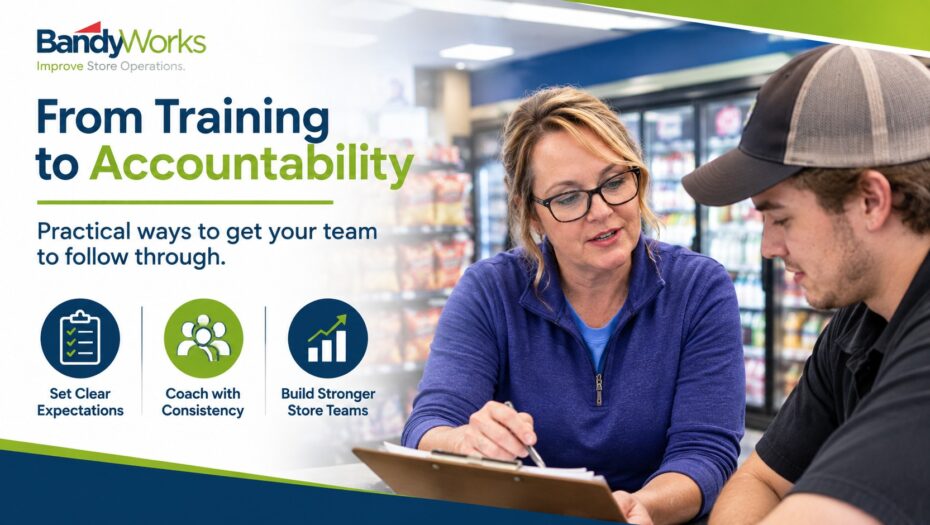
Training an employee is only the first step. The harder part is getting the behavior to stick once the training is over. Employee accountability starts with clear expectations, but it also requires managers to coach, follow up, and make sure employees understand what needs to change when something isn’t getting done.
In a convenience store, managers don’t have time to repeat the same conversation every week. When a problem keeps coming back, it’s worth looking at whether the expectation was clear, whether the employee had the right support, and what needs to happen next.
Start With Clear Expectations
Before you can hold someone accountable, make sure they know what they’re being asked to do.
“Keep the cooler stocked” sounds simple, but an employee may not know when the cooler should be checked, what should be filled first, or what to do when something is out of stock.
A good expectation answers the basic questions:
- What needs to be done?
- When should it be done?
- What does doing it correctly look like?
- What should the employee do when there is a problem?
The clearer the expectation, the easier the follow-up becomes.
Coach the Behavior, Not the Person
Accountability conversations can go wrong when they become personal.
Instead of telling someone they’re careless or aren’t doing a good job, focus on the specific behavior that needs to change.
For example:
“This is the standard we need to follow. Let’s talk about what’s getting in the way.”
That keeps the conversation focused on the work rather than making the employee feel attacked.
Our Weekly Workshop discussions around coaching emphasized the importance of communicating expectations, company policies, and ways to improve rather than making the conversation personal.
If you’re looking to build stronger managers and make accountability part of your store’s everyday culture, learn more about the BandyWorks Manager Certification Program.
Ask What’s Getting in the Way
Not every performance issue has the same cause.
Sometimes an employee needs more training. Sometimes the expectation wasn’t clear. Sometimes they need more support or a different approach from their manager.
And sometimes there is something going on outside of work that is affecting their performance.
That doesn’t mean a manager should ignore the problem. It means it’s worth having a conversation before deciding what the problem is.
A simple question can help:
“What’s making this difficult for you?”
The answer may tell you whether you need to train, coach, support, or hold the employee accountable.
Follow Up
This is where many coaching conversations lose their impact.
A manager has the conversation, the employee agrees to improve, and everyone moves on. A week later, the same issue comes up again.
Follow-up is what connects the conversation to actual improvement.
Check back in. Did the behavior change? Is the employee following the process consistently? Do they need more help?
Managers should also be consistent. If one employee is held to a standard while another is allowed to ignore it, the people doing the right thing notice.
Know When to Move Beyond Coaching
If an employee has been trained, understands the expectation, has received coaching, and still chooses not to follow the process, the conversation may need to become more formal.
That doesn’t mean the manager failed.
Good employee accountability isn’t about looking for reasons to discipline people. It’s about making sure employees know what is expected, giving them a fair opportunity to meet that expectation, and following through when they don’t.
Want to Go Deeper on Accountability? Get Your Free Accountability Book
Make Follow-Through Part of the Culture
The goal isn’t to catch employees doing something wrong.
It’s to create a store where people know the standard, understand why it matters, and know their manager will follow up.
When expectations are clear and coaching is consistent, accountability becomes less about having difficult conversations and more about creating a team that knows what good performance looks like.
Training teaches the job. Coaching reinforces it. Accountability makes sure it gets done.
Read More
Want to see what accountability looks like in a real convenience store? Read C-Store Leadership Accountability: What Actually Works for Store Managers, featuring Mindy Edelman of Pioneer MainStop.
C-Store Leadership Accountability: What Actually Works for Store Managers