June 9, 2026
Convenience store team development is one of the biggest challenges facing store managers today. Building a team that communicates well, follows consistent processes, and continues improving takes time, patience, and strong leadership.
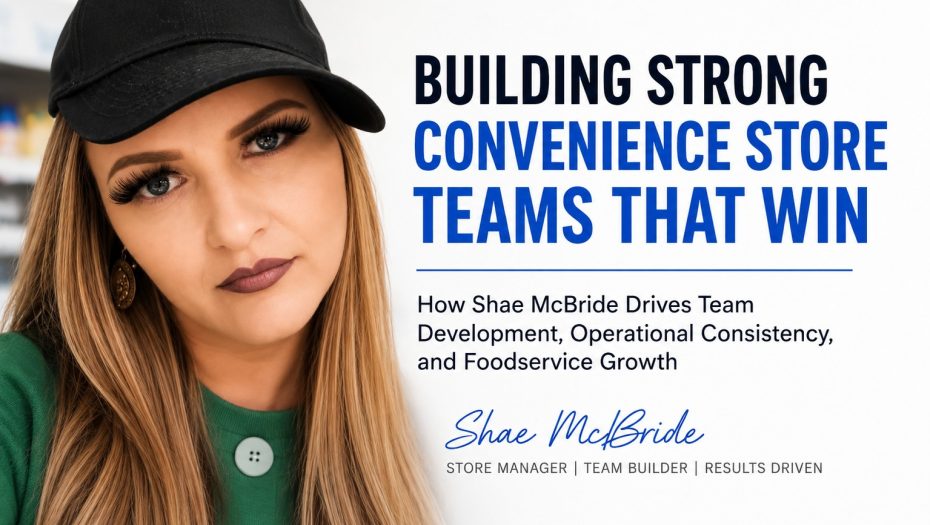
For Shea McBride, a store manager focused on growing both her team and her business, that has meant creating clear systems, improving communication between shifts, simplifying store procedures, and finding opportunities hidden in the data. From restructuring employee resources to doubling foodservice sales, Shae has focused on building an operation that can succeed consistently, even when challenges arise.
Convenience Store Team Development Starts with Hiring
For Shea, team development begins long before an employee’s first shift.
She believes hiring is about more than filling an open position. It’s about finding people who fit the culture and understand what is expected from the start.
“When I start the hiring process, I like to be very detailed about what I’m expecting from the team, the individual, and what I’m trying to create as the team.”
She focuses on being upfront about expectations while also making sure new hires fit well with the existing team.
That clarity creates a stronger foundation for everything that follows.
Turning a Handbook into a System
Like many managers, Shea spent a long time trying to create the perfect employee handbook. What started as a handbook eventually became a massive collection of policies, procedures, and operational information. After more than a year of working on it, she realized the solution wasn’t adding more information. It was simplifying it.
“I didn’t need all of that in a handbook. I just needed a portion of it.”
Instead of one large document, she broke everything into separate guides covering hiring, store operations, policies, and management responsibilities. The guides are now available digitally through employee software, making information easier for employees to access and use.
The impact was immediate.
“It made me feel organized. It made me feel like a weight was lifted off my shoulders.”
More importantly, it gave employees a resource they could rely on when questions came up.
“It gave clarity and an understanding of how the store should run.”
Convenience Store Team Development Never Stops
One thing became clear throughout the conversation: Shae sees team development as a continuous process.
“Building a team never stops.”
She describes leadership as a combination of patience, communication, and consistency. Group chats help keep everyone informed. Store meetings keep employees aligned. More recently, she introduced shift handovers to improve communication between teams.
If there is an equipment issue, a fuel concern, or an important customer request, employees are expected to communicate that information to the next shift.
“We make sure they inform the next shift. That’s helping out a lot.”
These small improvements help create consistency throughout the day and prevent information from getting lost during shift changes. As with many convenience stores, staffing challenges occasionally arise. Personal issues sometimes affect team members and create challenges for the operation.
For Shea, maintaining a strong team culture remains a priority.
“We’re like family. We have each other’s back.”
Using Data to Improve Foodservice Sales
While working on team development and operations, Shea also identified an opportunity to improve foodservice performance. The discovery came from something simple: looking at the data.
At the time, food preparation started around 7 a.m., and most food items were ready by 8:30 a.m. After reviewing daily reports, she noticed something surprising.
“I realized that our busy times had no food.”
The store’s busiest periods were happening before food was available. She brought the information to ownership and proposed a change. With support from her boss, the team adjusted staffing and started preparing food much earlier in the morning.
Today, many food items are available by 4 a.m., allowing the store to serve customers during peak traffic hours. The results were immediate.
“It doubled.”
By making food available when customers were actually in the store, Shae turned a missed opportunity into one of the store’s biggest growth areas.
Building Systems That Survive Employee Turnover
One of the realities of retail management is that key employees eventually move on. Whether someone changes careers, relocates, or simply pursues a new opportunity, strong operations need to continue. That’s why Shea focuses heavily on creating systems that survive employee turnover.
“I’ve been actively working on creating sustainable systems so that when something is disrupted, I have a backup plan.”
- Food preparation instructions are documented.
- Equipment procedures are available.
- Processes are standardized.
The goal is to ensure that employees can step in and perform tasks consistently, regardless of who is working. She admits the process isn’t always easy.
“It’s trial and error. Trial and error are really what makes and breaks things.”
Each challenge creates another opportunity to improve the system and strengthen the operation.
Leading Through Continuous Improvement
When asked how she stays focused despite juggling countless responsibilities, Shae’s answer was refreshingly simple.
She writes things down.
Documenting priorities, challenges, and opportunities helps her stay organized while continuing to improve the business.
Most importantly, she approaches leadership with the understanding that there is always another opportunity to learn and grow.
“There’s always room for improvement.”
That mindset has helped her strengthen operations, improve communication, grow foodservice sales, and build a stronger team.
Building Systems That Help Teams Succeed
Throughout the conversation, Shea returned to the same idea again and again: consistency.
Whether she’s improving foodservice, developing employees, or simplifying operations, her focus remains on creating systems that help people succeed.
“There’s always room for improvement.”
That mindset continues to shape how she leads her team and grows her store every day.
Watch the Full Conversation to hear more from Shae on convenience store team development, foodservice growth, and building systems that help teams succeed.
Learn more about developing strong store leaders through our Manager Certification Program, or explore additional Convenience Store Leadership Stories from leaders across the industry.
C-Store Leadership Accountability: What Actually Works for Store Managers